When the Shelf Is Empty: A Canadian Patient's Survival Guide to Prescription Drug Shortages
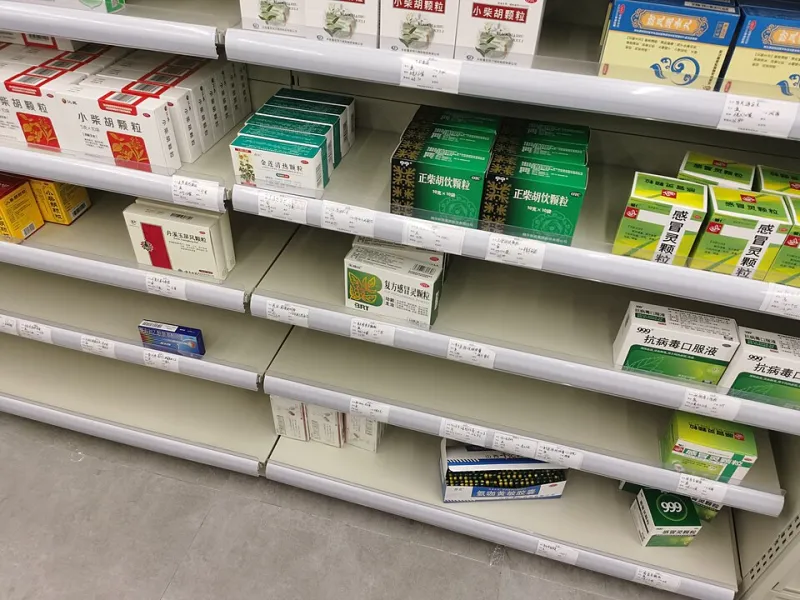
Photo: Shwangtianyuan, CC BY-SA 4.0, via Wikimedia Commons
When Your Pharmacy Can't Fill Your Prescription
You hand over your prescription, wait a few minutes, and then hear words no patient wants: "We're out of stock, and we're not sure when it will be back." For many Canadians, this scenario has shifted from an occasional inconvenience to a frustrating regularity. According to Health Canada's Drug Shortages Database, the number of active shortages has grown substantially over the past several years, touching everything from common blood pressure medications to critical psychiatric drugs.
Understanding why this happens—and knowing exactly what to do—can mean the difference between a temporary disruption and a genuine health risk.
Why Drug Shortages Happen in Canada
Canada's pharmaceutical supply chain is deeply interconnected with global manufacturing networks. The majority of active pharmaceutical ingredients are produced in a small number of countries, meaning a single factory closure, a raw material delay, or a shipping disruption can ripple across the entire Canadian market almost immediately.
Additionally, drug pricing regulations in Canada—while beneficial for affordability—can sometimes make certain medications less profitable for manufacturers to supply here, leading companies to prioritise other markets. Regulatory delays, unexpected surges in demand (particularly during flu season or public health events), and product recalls all compound the problem.
The result is a system where even well-stocked pharmacies can find themselves without a medication that was available just weeks earlier.
Your First Call: Talk to Your Pharmacist Immediately
When you discover a shortage, your pharmacist is your most important ally. Licensed pharmacists in Canada are trained to navigate supply gaps, and their professional networks often give them access to information and options that are not visible to the average patient.
Here is what to ask your pharmacist directly:
- Is there a different strength or formulation available? Sometimes a tablet shortage does not affect a liquid or extended-release version of the same drug.
- Is a therapeutic equivalent available? Your pharmacist may be authorised, in consultation with your prescriber, to substitute a clinically similar medication from a different drug class.
- Can a partial fill bridge the gap? If limited stock exists, a partial dispense can keep your therapy uninterrupted while a full supply is secured.
- Is the shortage local or national? A shortage at one pharmacy does not always mean a shortage everywhere. Your pharmacist can check with wholesalers and may be able to source your medication from another location.
Contacting Your Prescriber: A Necessary Step
If your pharmacist cannot resolve the shortage independently, your prescribing physician or nurse practitioner must be informed promptly. Do not wait to see whether the medication reappears on its own, particularly if you take a drug for a chronic or serious condition.
Your prescriber may be able to:
- Write a new prescription for a therapeutically equivalent alternative
- Adjust your dosing schedule to extend an existing supply
- Apply for access to a drug through Health Canada's Special Access Programme, which provides pathways to medications not currently available on the open market
Bring documentation with you or be prepared to describe your current regimen precisely, including dosage, frequency, and how long you have been on the medication. The more clearly you communicate, the faster a clinical decision can be made.
Navigating Provincial Drug Programs During a Shortage
Each province and territory in Canada administers its own public drug benefit programme, and these programmes sometimes have provisions specifically designed for shortage scenarios. In Ontario, for example, the Ontario Drug Benefit programme has mechanisms for emergency supplies. British Columbia's PharmaCare and Alberta's Blue Cross programmes similarly have shortage-response protocols.
Contact your provincial drug programme directly, or ask your pharmacist to do so on your behalf. In some cases, prior authorisation requirements can be expedited, or a non-formulary drug can be temporarily approved when a listed medication is unavailable.
Proactive Strategies to Reduce Your Vulnerability
The most effective response to drug shortages is one taken before a shortage occurs. Consider these practical measures:
Maintain a modest buffer supply. If your provincial formulary and your prescriber allow it, try to keep at least a two-week supply ahead of your actual need. This is not about hoarding—it is about giving yourself a reasonable window to find solutions without urgency.
Monitor Health Canada's Drug Shortages Database. This publicly accessible resource (canada.ca) lists current and anticipated shortages. If you take a medication for a serious condition, checking this database periodically can give you early warning.
Ask about 90-day supplies. Many insurance plans and provincial programmes permit 90-day dispensing. A longer supply means fewer refill cycles and fewer opportunities for a shortage to catch you unprepared.
Register with an online pharmacy that holds national relationships. A licensed Canadian online pharmacy with established wholesaler networks may have access to stock that a single local pharmacy does not. At CanadaRx Health, our pharmacists work within a national supply framework, which can provide additional options during regional shortages.
What to Do If You Must Temporarily Stop a Medication
In rare cases, a shortage may be prolonged and no suitable alternative is immediately available. If you are facing an unplanned interruption in your medication, never simply stop without guidance—particularly for medications used to manage cardiovascular conditions, diabetes, epilepsy, mental health conditions, or hormonal therapies.
Contact your pharmacist or prescriber immediately and ask for explicit instructions on how to manage the gap safely. Some medications require a gradual taper; others may require temporary monitoring of specific health markers. This is a clinical conversation that must happen before you miss a dose, not after.
CanadaRx Health and Shortage Support
At CanadaRx Health, our licensed pharmacists are available to consult with patients experiencing supply disruptions. We can review your current prescriptions, assess whether alternatives are appropriate, liaise with your prescriber on your behalf, and work within our national network to locate available stock.
A drug shortage is stressful. But with the right information, the right professional support, and a proactive approach, most patients can navigate these disruptions without compromising their health outcomes. The key is to act early, communicate clearly, and use every resource available to you.